

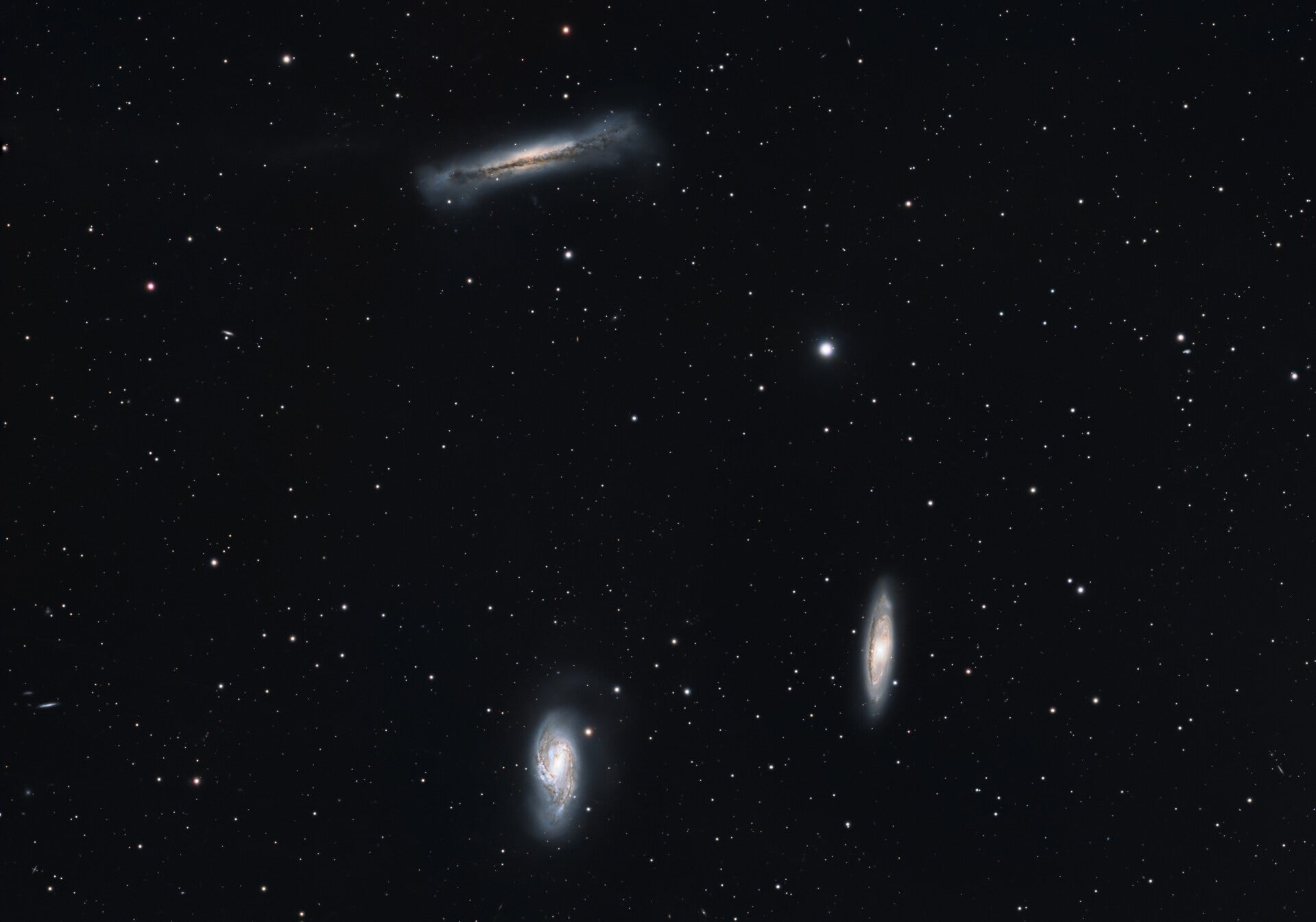
The Leo Triplet Galaxies
This image captures the magnificent Leo Triplet Galaxies, a prominent group of three spiral galaxies located approximately 35 million light-years away in the constellation Leo. The image was acquired using an FS-102 telescope paired with an ASI 2600 MM Pro camera, utilising LRGB filters to achieve a detailed and vibrant representation of these celestial objects. The Leo Triplet consists of Messier 65 (M65), Messier 66 (M66), and NGC 3628, also known as the Hamburger Galaxy. These galaxies are gravitationally interacting, a process that has sculpted their forms and continues to influence their evolution. M65 and M66 exhibit classic spiral structures with well-defined arms and bright central bulges, while NGC 3628 displays a more distorted appearance, likely due to tidal forces from its companions, characterised by a prominent dust lane bisecting its disk. This captivating image offers a clear view of these interacting galaxies, highlighting their distinct features and the intricate dance of gravitational forces at play within this galactic group.
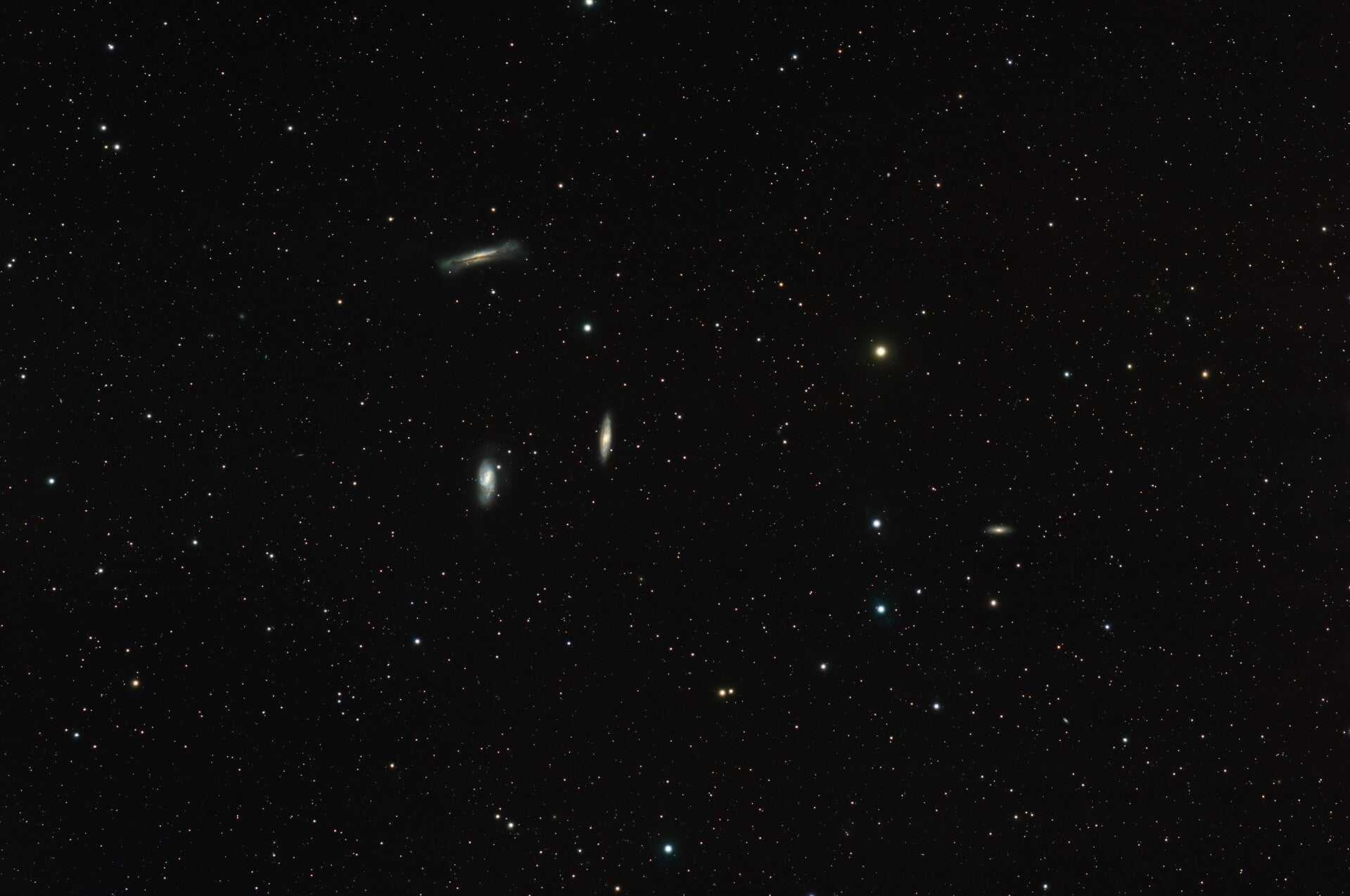
Leo Triplet Galaxies with the FS-60CB and ASI 071 MC Pro
This image captures the Triplet using the Takahashi FS-60CB refractor and the ZWO ASI 071 MC Pro camera. The FS-60CB, known for its excellent optics and portability, provides a wider but crisp and detailed view of these distant celestial objects. Paired with the ASI 071 MC Pro, a colour camera renowned for its low noise and high quantum efficiency, the setup effectively captures the subtle nuances and intricate structures within each galaxy. The image showcases NGC 3628 (the Hamburger Galaxy), M65, and M66, highlighting their distinct morphologies and the gravitational interactions that define this galactic trio. The combination of this particular telescope and camera has yielded a visually striking and scientifically valuable representation of one of the sky's most popular deep-sky targets.
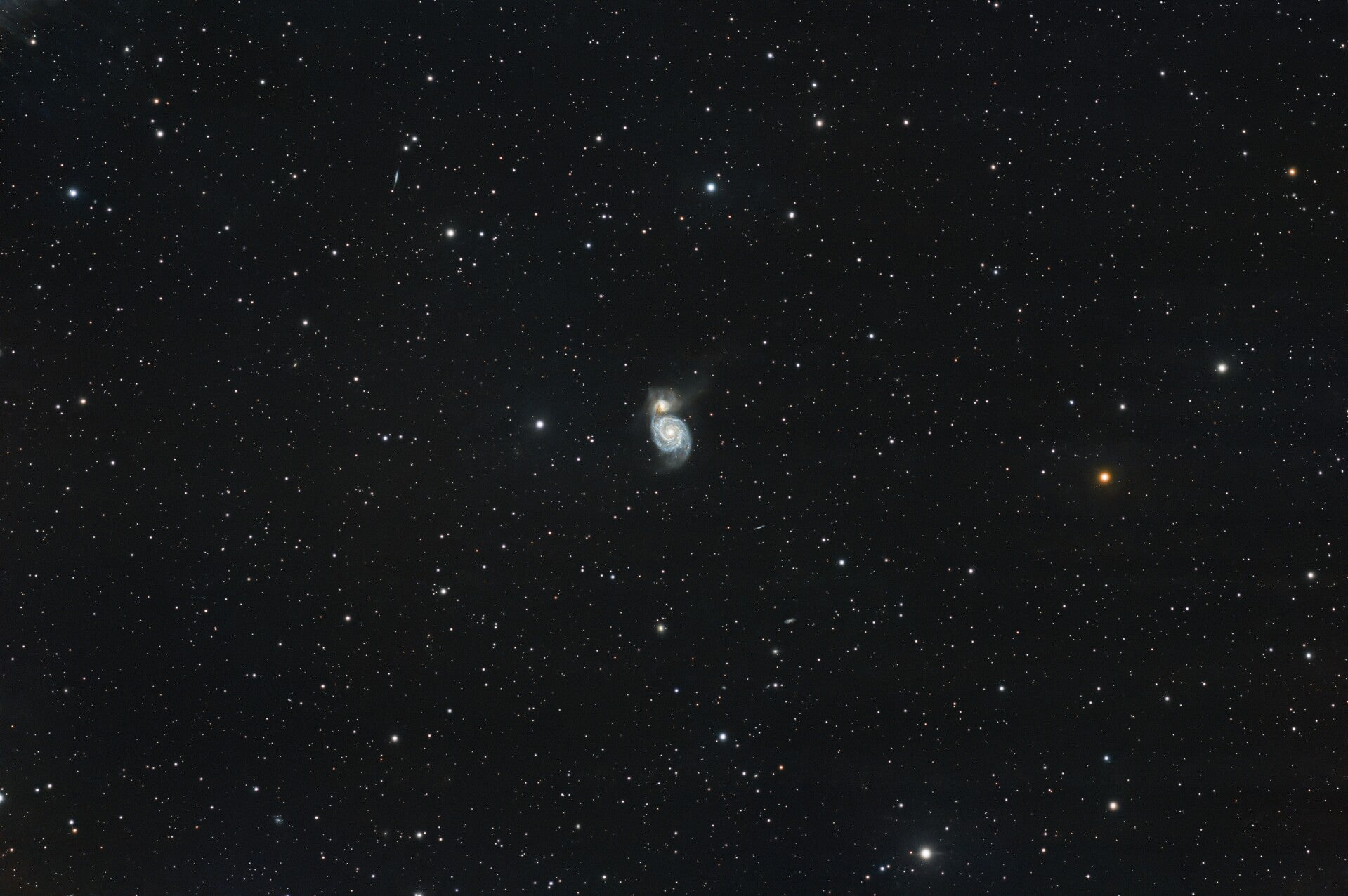
The Whirlpool Galaxy: A Cosmic Dance
This captivating image showcases the Whirlpool Galaxy (M51), a magnificent spiral galaxy located approximately 23 million light-years away in the constellation Canes Venatici. It's renowned for its prominent spiral arms and its smaller companion galaxy, NGC 5195, which appears to be interacting with M51, pulling at its spiral arms and triggering bursts of star formation. This cosmic interaction is a prime example of galactic evolution in action, offering astronomers a valuable insight into how galaxies merge and change over vast spans of time.
The image itself was captured using a Takahashi FS-60CB telescope paired with an ASI 071 MC Pro camera. An IDAS LPS filter was employed to enhance contrast and reduce light pollution, allowing for clearer detail of the galaxy's intricate structure. A total exposure of 2 hours was achieved through multiple 2-minute unguided sub-exposures, tracked by an EM-200 USD3 mount. This combination of equipment and careful imaging techniques has resulted in a stunning portrayal of one of the night sky's most iconic and dynamic celestial objects.
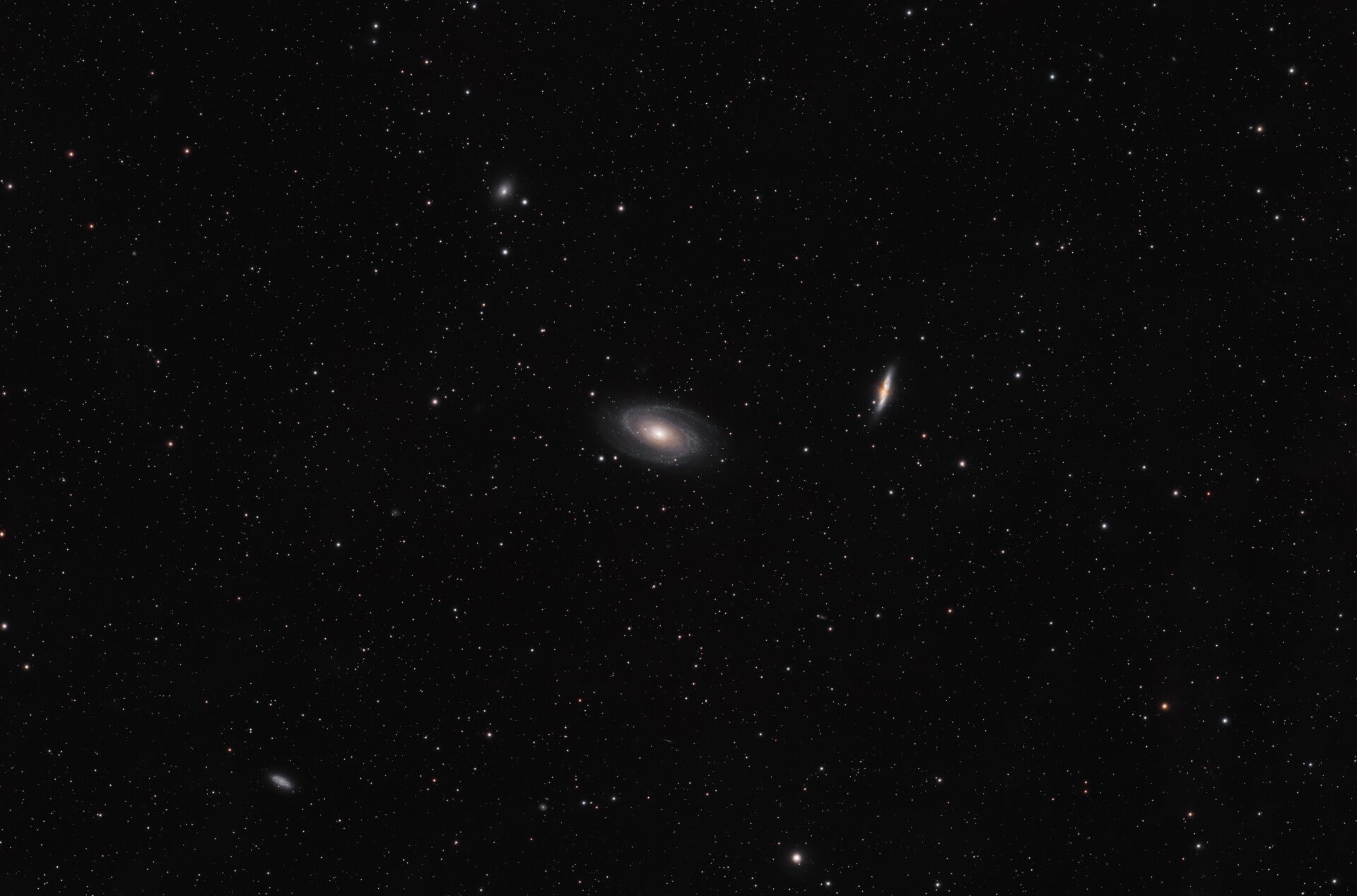
M81 and M82: A Galactic Pair
M81 and M82, also known as Bode's Galaxy and the Cigar Galaxy respectively, are a captivating pair of galaxies located in the constellation Ursa Major. M81 is a grand design spiral galaxy, showcasing elegant, well-defined spiral arms, while M82 is a starburst galaxy, undergoing a period of intense star formation, likely triggered by its gravitational interaction with M81. This dynamic duo offers a fascinating glimpse into galactic evolution and interaction.
This image of M81 and M82 was captured using a Takahashi FS-60CB refractor telescope, paired with an ASI 071 MC Pro camera and an IDAS LPS filter. The acquisition involved two hours of unguided two-minute sub-exposures, tracked by an EM-200 USD3 mount.
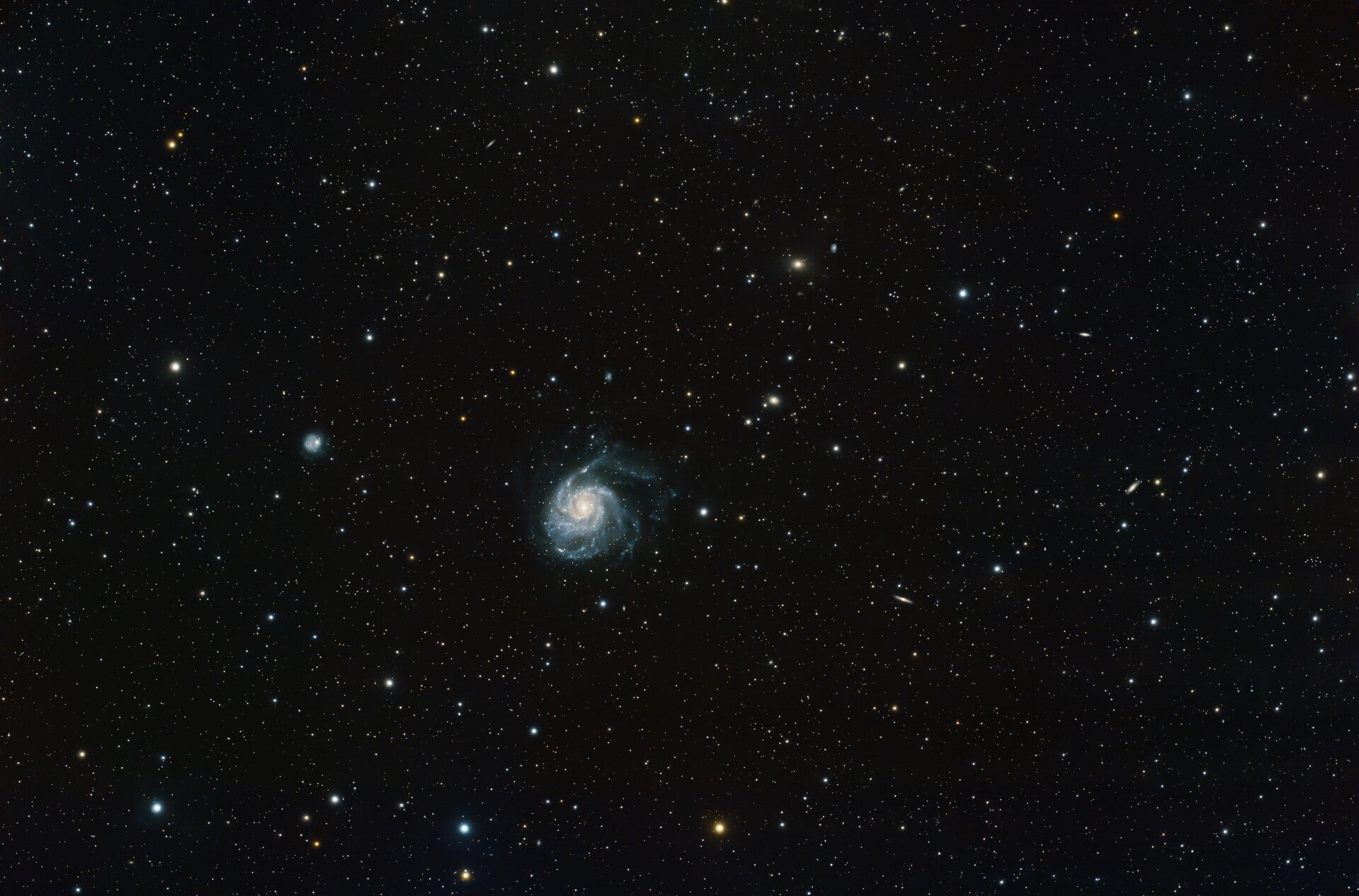
The Pinwheel Galaxy (M101)
The Pinwheel Galaxy, also known as Messier 101 (M101), is a magnificent face-on spiral galaxy located approximately 21 million light-years away in the constellation Ursa Major. It is one of my personal favourites due to its stunning, well-defined spiral arms and numerous star-forming regions, which appear as bright, blue knots of young stars. This particular image of M101 was captured using a Takahashi FS-60CB refractor, paired with an ASI 071 MC Pro camera and an IDAS LPS filter to combat light pollution. The acquisition involved 2 hours of unguided 2-minute sub-exposures, all tracked by an EM-200 USD3 mount, resulting in a detailed and vibrant portrayal of this cosmic wonder.
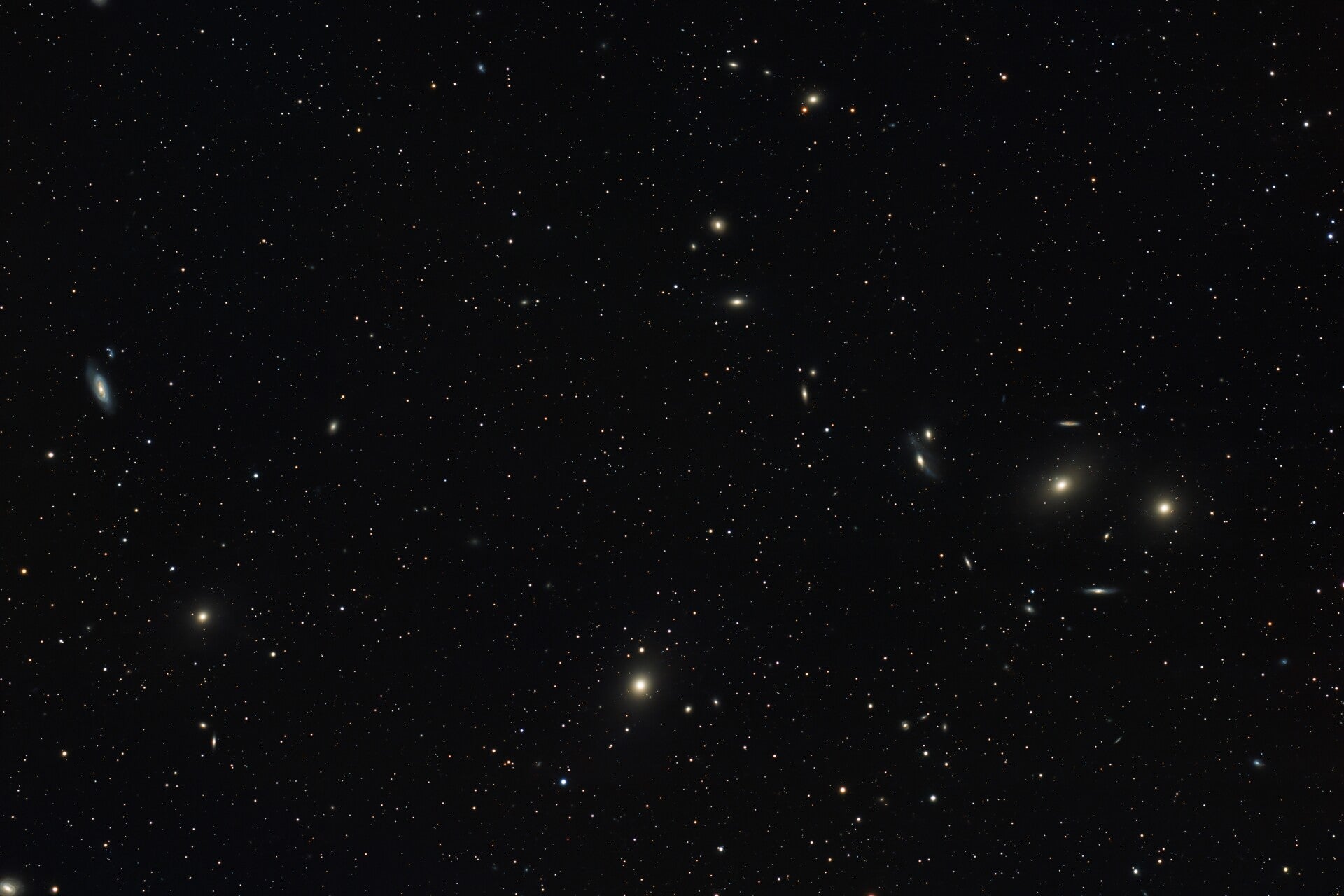
The Markarian Chain
This image, while small, offers a surprisingly detailed view of the Markarian Chain, a prominent string of galaxies located within the Virgo Cluster. Captured using a Takahashi FS-60 CB refractor, an ASI 071 MC Pro camera, and an IDAS LPS filter, the photograph is the result of 2 hours of unguided 2-minute sub-exposures. Despite the relatively modest aperture and the challenges of unguided imaging, the intricate structures of these distant galaxies are discernible, showcasing the capabilities of careful acquisition and processing even with accessible amateur astronomy equipment.
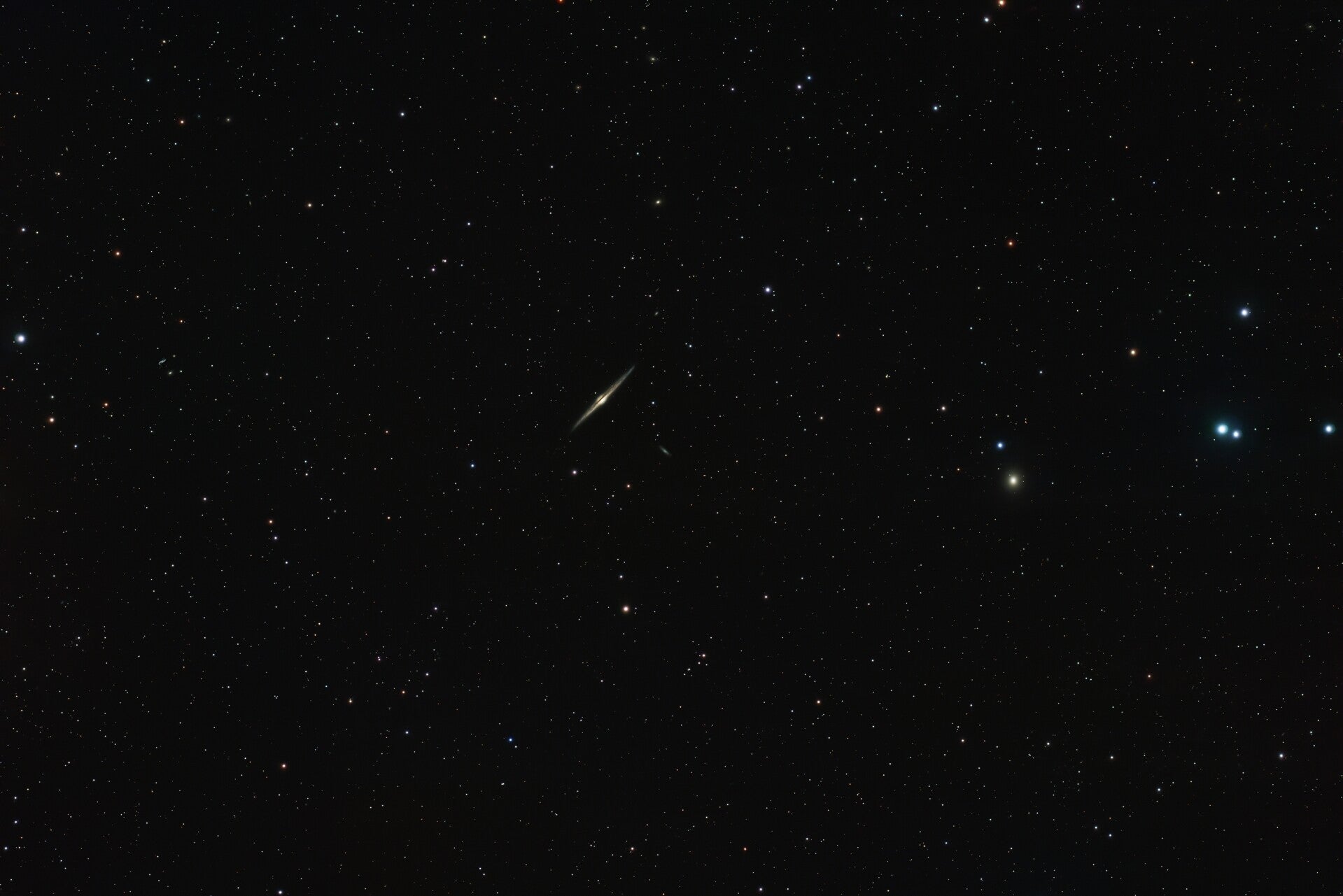
NGC 4565: The Needle Galaxy
NGC 4565, often dubbed the Needle Galaxy, is a stunning example of an edge-on spiral galaxy located approximately 30 million light-years away in the constellation Coma Berenices. Its striking appearance, with a thin, sharp disk viewed almost perfectly from its side, makes it a favourite target for astrophotographers and astronomers alike. This particular wide-field view, captured with an FS60CB telescope, beautifully highlights not only the galaxy's elegant profile but also reveals a wealth of surrounding detail.
The FS60CB, a compact yet powerful refractor, is well-suited for capturing such expansive celestial vistas. In this image, the telescope's excellent optics bring out the delicate dust lanes that bisect NGC 4565's bright central bulge, a hallmark of its spiral structure. These dark lanes are regions where interstellar dust obscures the light from stars behind them, providing a dramatic contrast against the galaxy's luminous core. The clarity and resolution achieved even in a wide field allow for the subtle nuances of these dust lanes to be appreciated, showcasing the intricate internal structure of the galaxy.
Beyond the galaxy itself, the wide field of view captured by the FS60CB is particularly rich. Numerous fainter background galaxies are scattered across the image, appearing as tiny smudges of light. These distant galaxies serve as a testament to the vastness of the universe and provide a sense of scale to NGC 4565's magnificence. The field is also dotted with foreground stars from our own Milky Way, appearing as sharp, distinct points of light, some exhibiting diffraction spikes due to the telescope's aperture. The overall composition, with NGC 4565 as the undeniable centrepiece, surrounded by a tapestry of other celestial objects, makes this a truly captivating astronomical photograph.
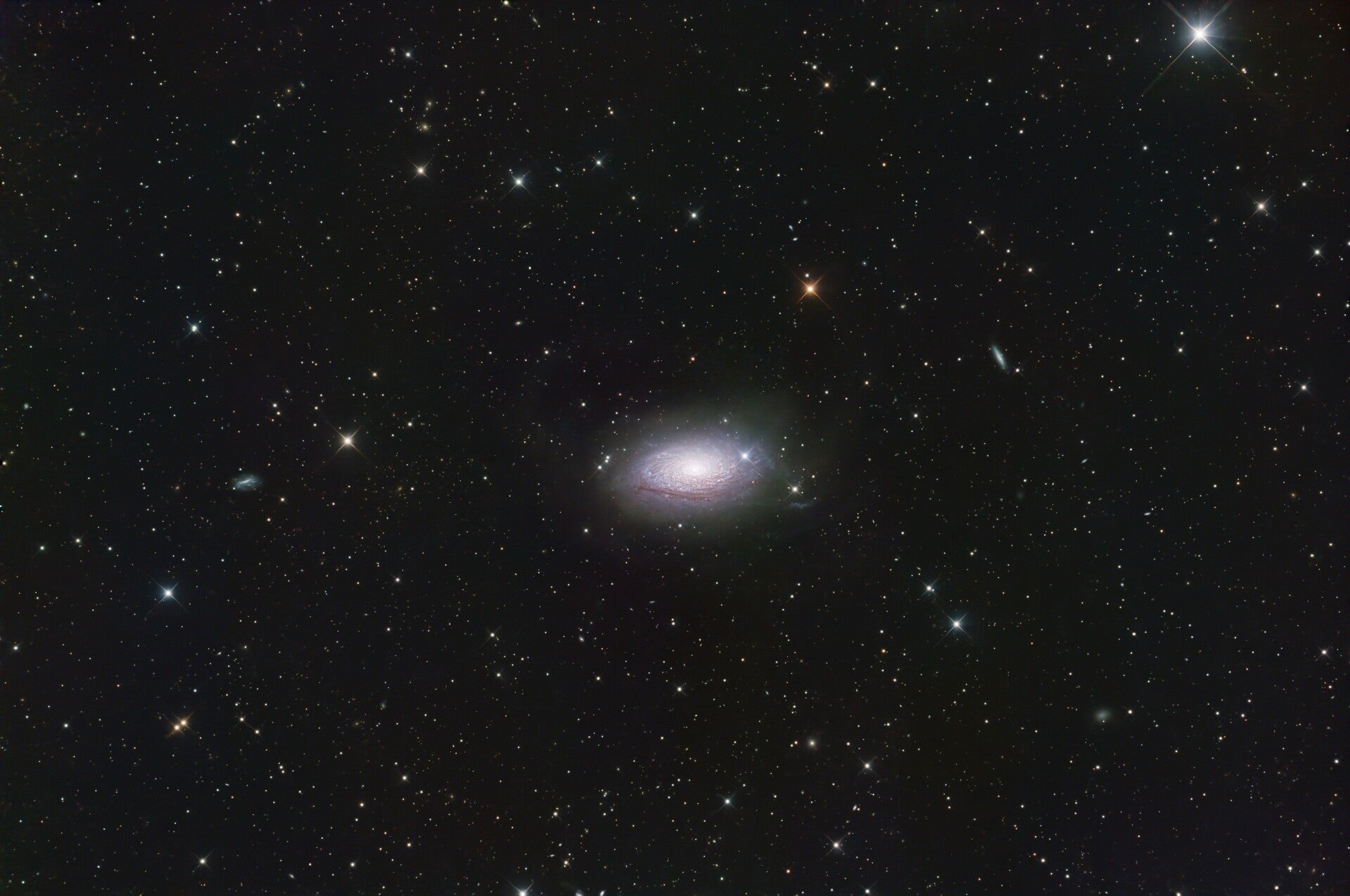
The Sunflower Galaxy: A Glimpse Through the Orion Newtonian
This image offers an initial look at the Sunflower Galaxy (Messier 63), captured as a test of the Orion Newtonian telescope. Even in this early stage, the potential of this instrument is evident, and I'm excited to see what it can achieve once properly dialled in. The Sunflower Galaxy, located approximately 27 million light-years away in the constellation Canes Venatici, is a magnificent spiral galaxy. It's easily recognisable by its prominent, tightly wound spiral arms, which are dotted with numerous star-forming regions, giving it a somewhat 'fluffy' or 'sunflower-like' appearance. These arms are rich in young, hot, blue stars, contrasting with the older, yellower stars in the galaxy's central bulge. M63 is also known for its active galactic nucleus, suggesting the presence of a supermassive black hole at its core. As I refine the telescope's settings and techniques, I anticipate capturing even more intricate details and vibrant colours of this stunning celestial object.
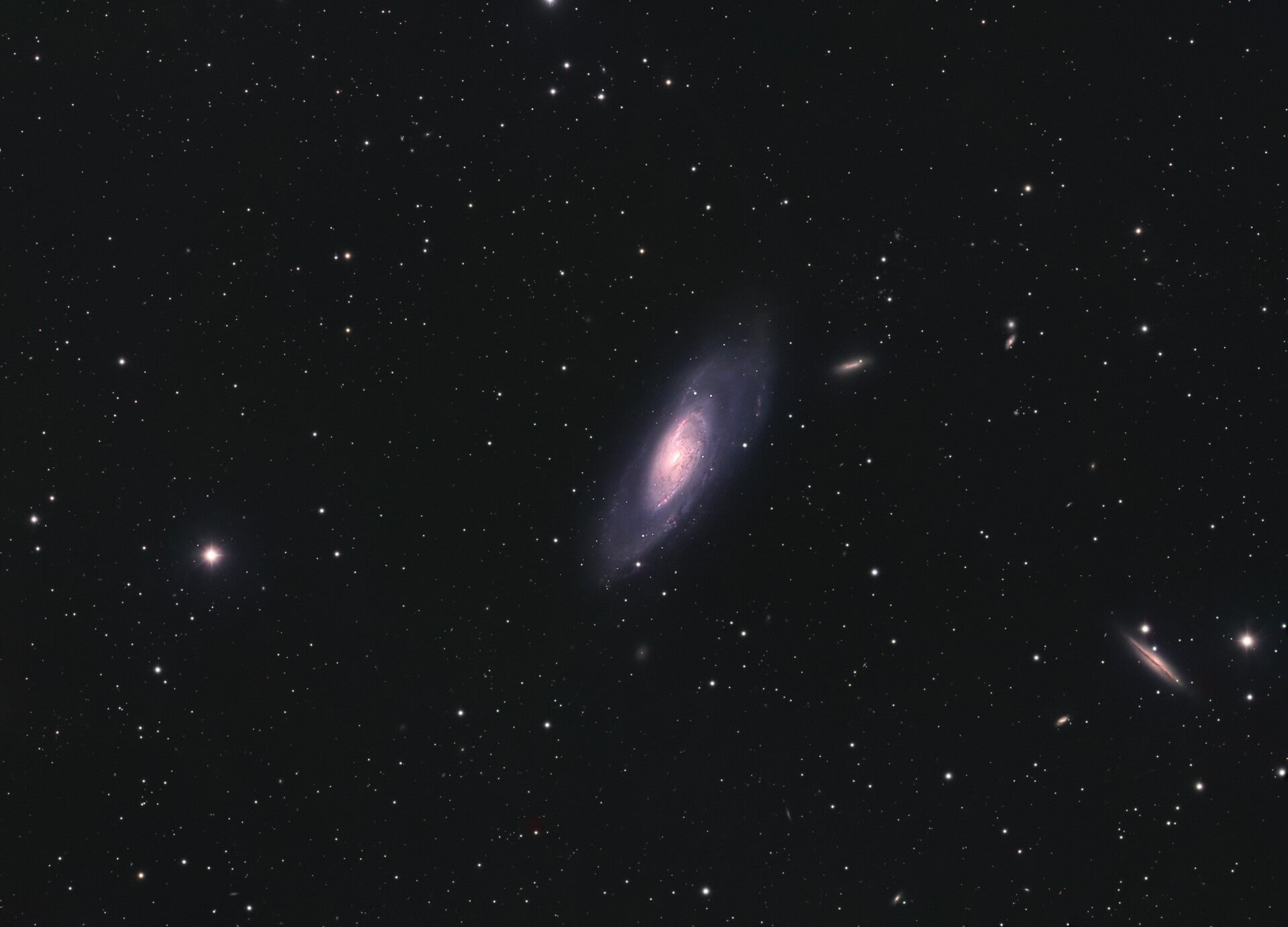
Messier 106: A Galactic Masterpiece Reimagined
Messier 106, a captivating spiral galaxy located approximately 23 million light-years away in the constellation Canes Venatici, is a fascinating object for astronomers and astrophotographers alike. This particular image represents a recent reprocessing of older data, originally captured with an FS-102 telescope and an SBIG ST-8300 camera. The composition combines LRGB (Luminance, Red, Green, Blue) data, further enhanced with the addition of H-alpha data. This integration of H-alpha is crucial for highlighting the intricate nebulosity present within the galaxy's spiral arms, revealing star-forming regions and adding depth and detail that might otherwise be less apparent.
Create Your Own Website With Webador