

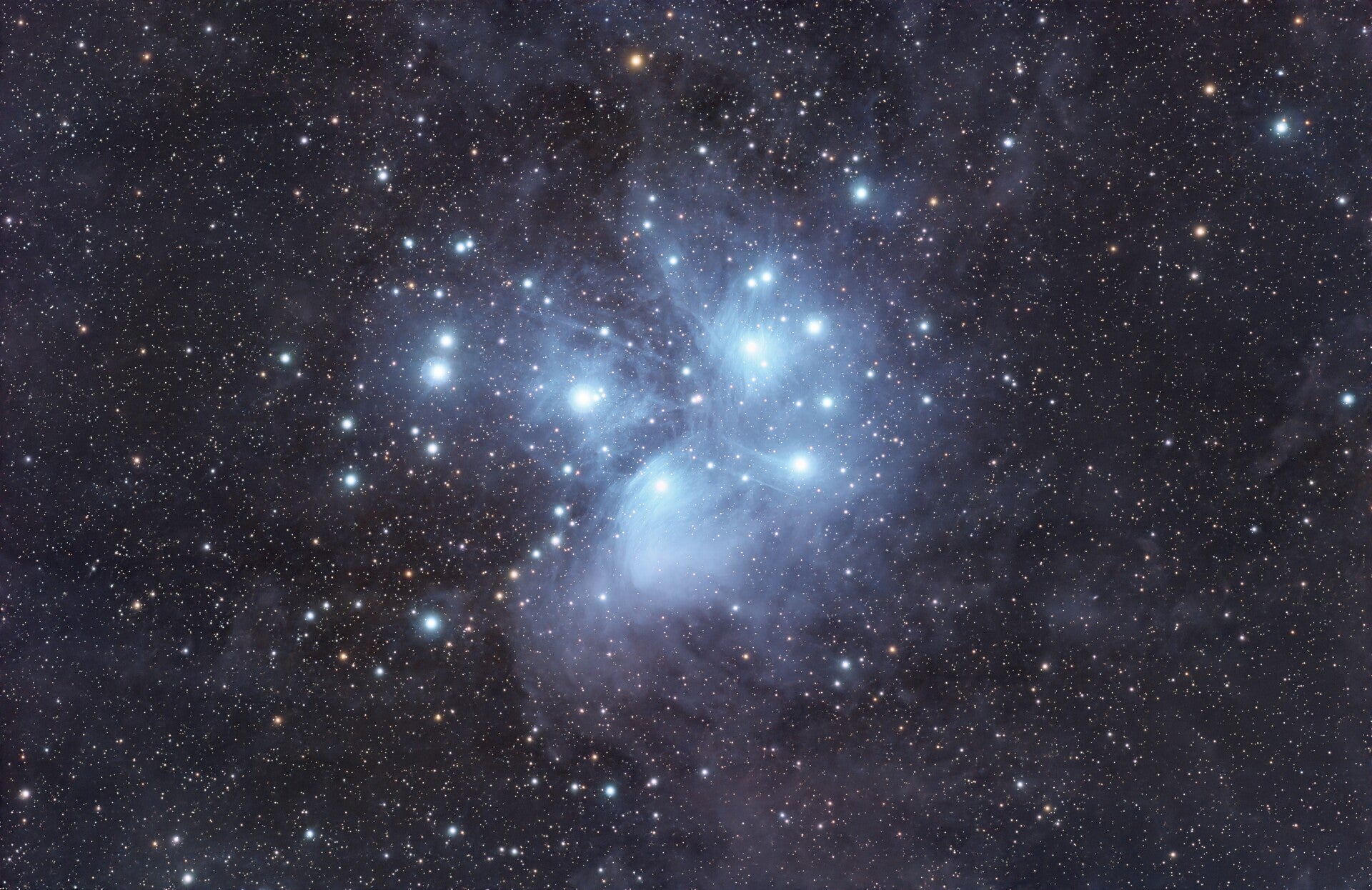
The Pleiades: A Celestial Gem
The Pleiades, also known as Messier 45 or the Seven Sisters, is an open star cluster located in the constellation Taurus. It is among the nearest star clusters to Earth and is one of the most conspicuous objects in the night sky, visible to the naked eye. This stunning cluster is dominated by hot, blue, luminous stars that have formed within the last 100 million years. The nebulosity often seen around the stars, as in your image, is not residual material from the cluster's formation but rather an unrelated dust cloud that the cluster is currently passing through. The starlight reflects off these dust particles, creating the beautiful blue reflection nebulae that make the Pleiades so photogenic. While the image may be slightly over-processed to enhance this delicate nebulosity, the result is undoubtedly pleasing and effectively highlights the ethereal beauty of this iconic celestial grouping. This image combines three hours of unguided 2 min subs with the FS-60CB, ASI 071 MC Pro and IDAS LPS filter.
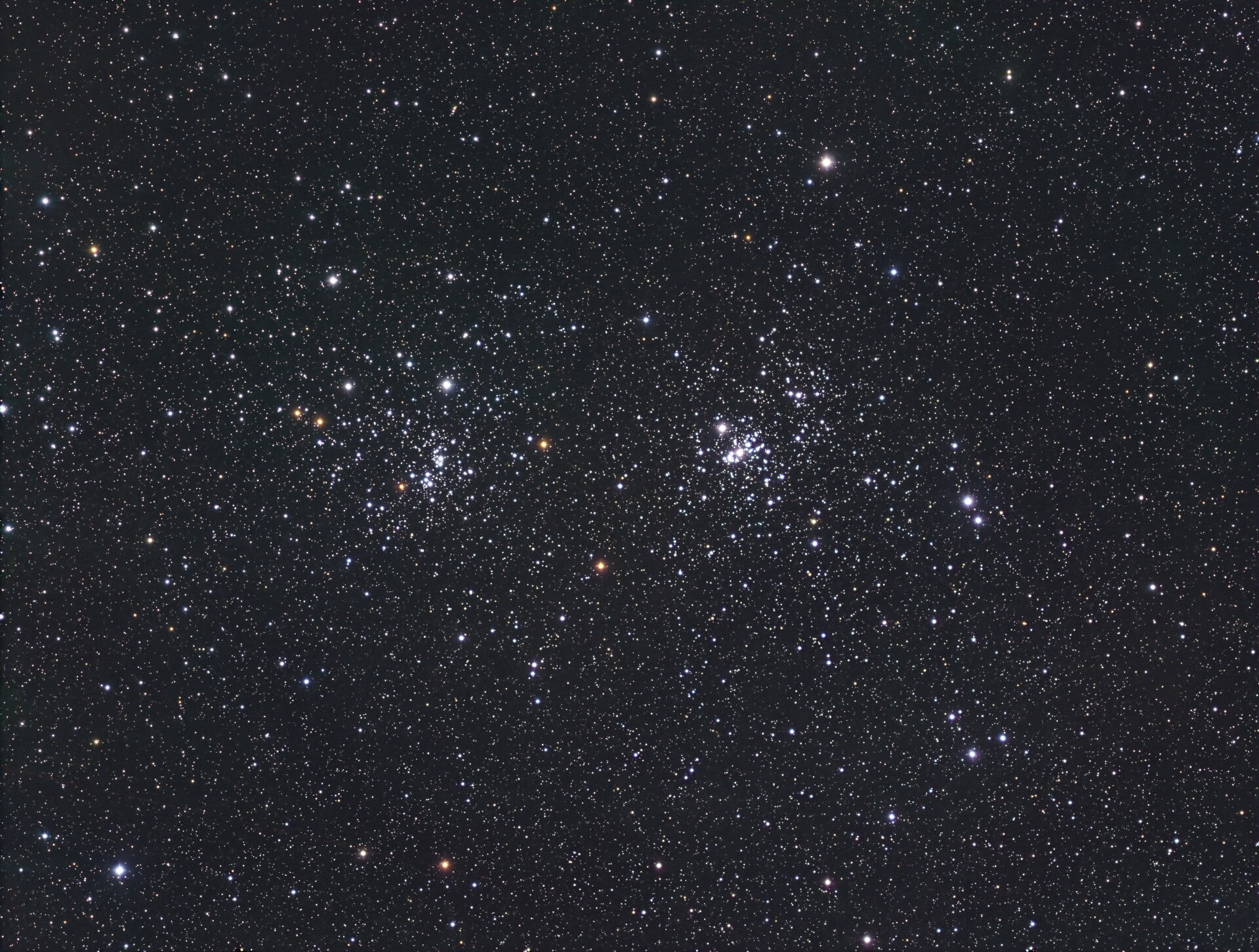
The Double Cluster: A Celestial Gem Captured
This image showcases the magnificent Double Cluster, a pair of open star clusters visible to the naked eye under dark skies. Located in the constellation Perseus, these clusters, catalogued as NGC 869 and NGC 884, are among the most impressive objects in the night sky. This particular photograph was taken several years ago using the FS-102 telescope paired with an SBIG ST-8300 CCD Camera. A total exposure time of just one hour was achieved through RGB filters, demonstrating the camera's efficiency and the telescope's light-gathering capabilities in capturing the intricate details and vibrant colours of this stellar duo.
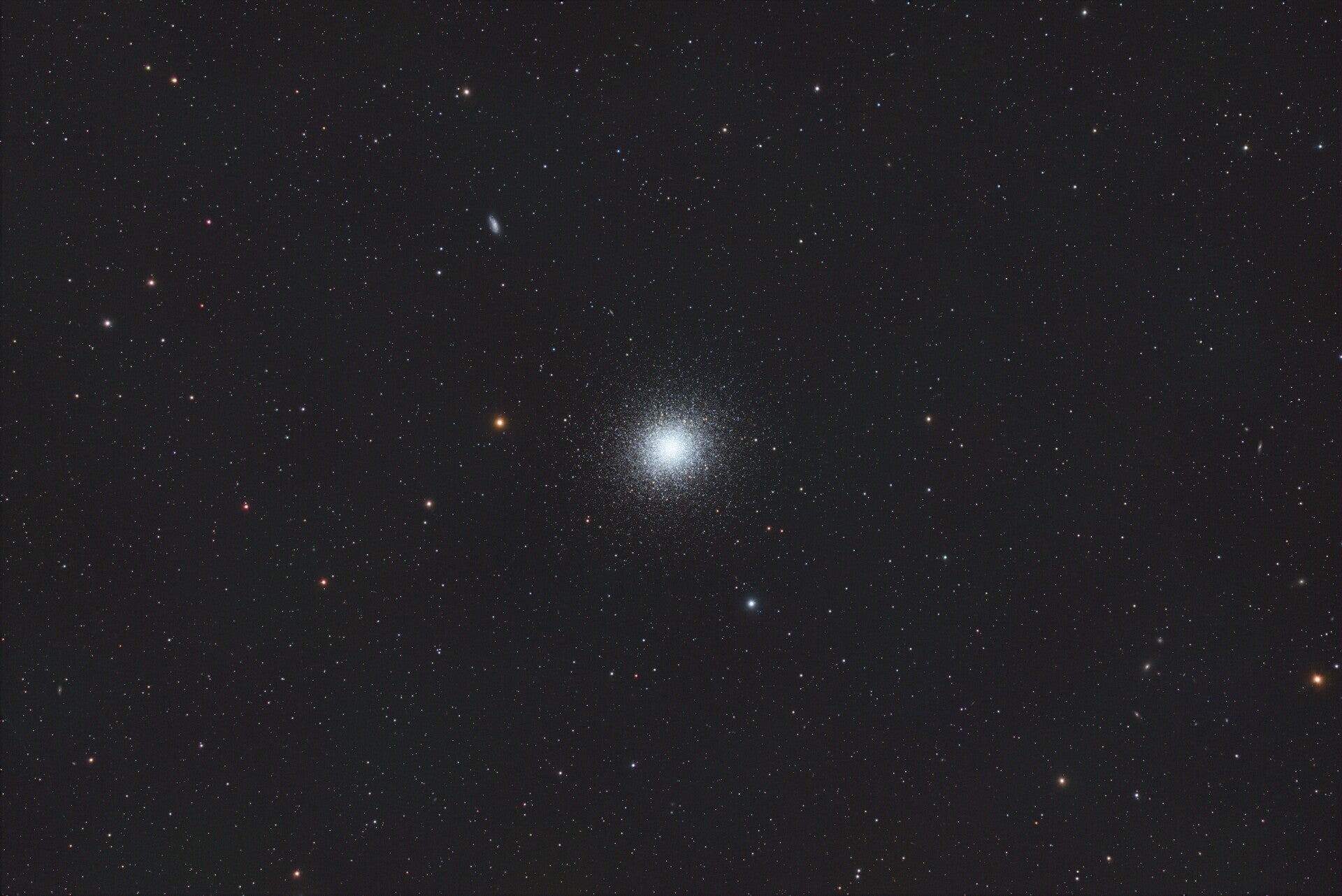
Messier 13: A Test of Equipment
This particular image captures Messier 13, also known as the Hercules Globular Cluster, a magnificent collection of hundreds of thousands of stars. This deep-sky target served as an excellent test subject for the FS-102 telescope, paired with the ASI 2600 MM Pro camera and Antlia RGB filters. The combination of this high-quality equipment allowed for a detailed assessment of performance, particularly in terms of star resolution, colour rendition, and overall signal-to-noise ratio, providing valuable insights into the setup's capabilities for astrophotography.
Beyond the technical evaluation, Messier 13 itself offers a captivating subject for astrophotographers. Its dense core, teeming with ancient stars, and the sprawling halo provide a dynamic range challenge, pushing the limits of imaging sensors to capture both the brightest and dimmest elements. The sheer number of stars also creates an opportunity to study stellar populations and the intricate gravitational dance within a globular cluster, making it a scientifically rich target as well as a visually stunning one.
Create Your Own Website With Webador