

My gear: A look behind the lens
Welcome to the heart of my astroimaging journey. Here, I share the essential equipment that helps me capture the wonders of the night sky, along with insights into why I trust these tools. Discover what goes into creating each celestial image.
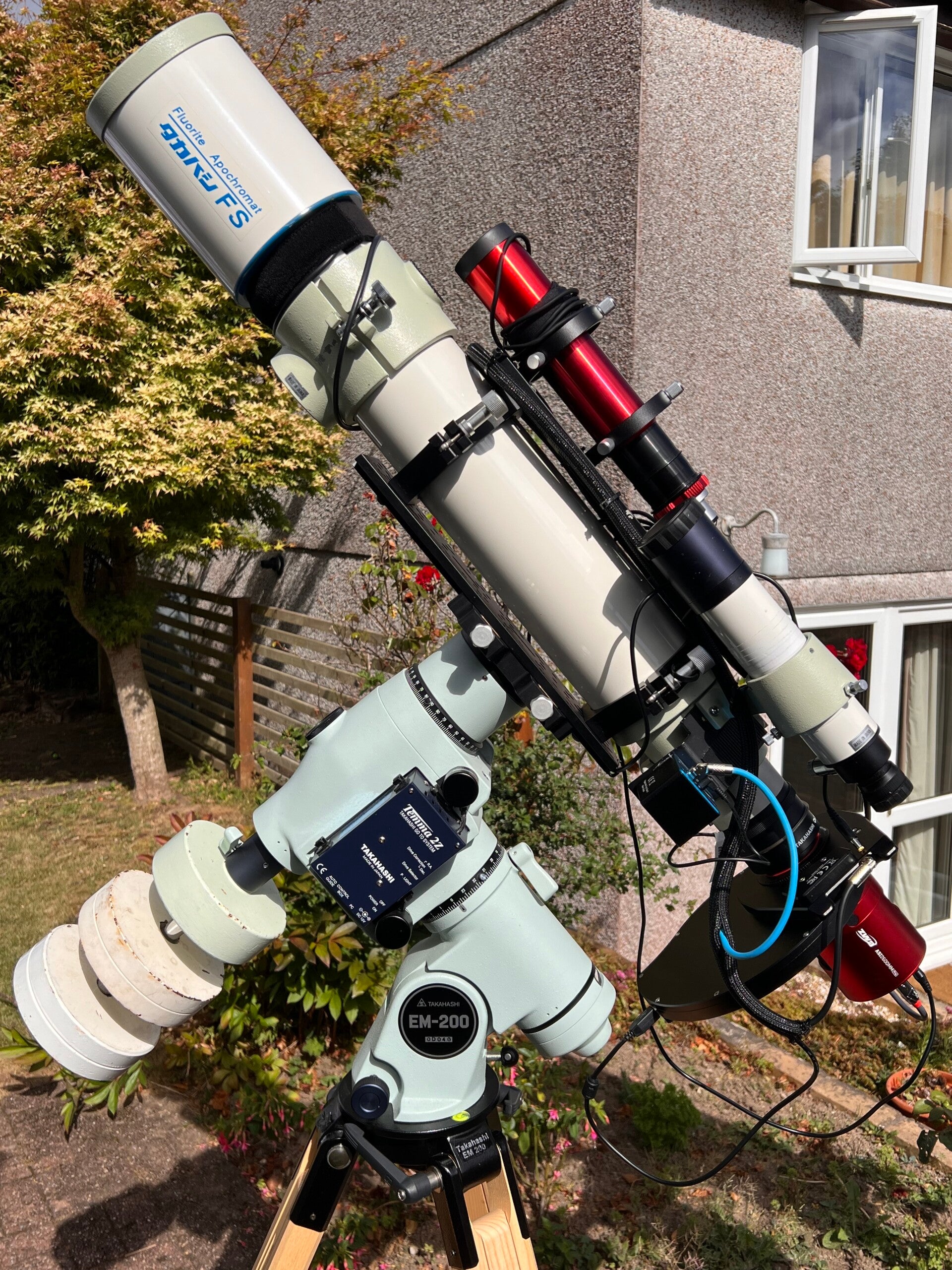
My main imaging setup
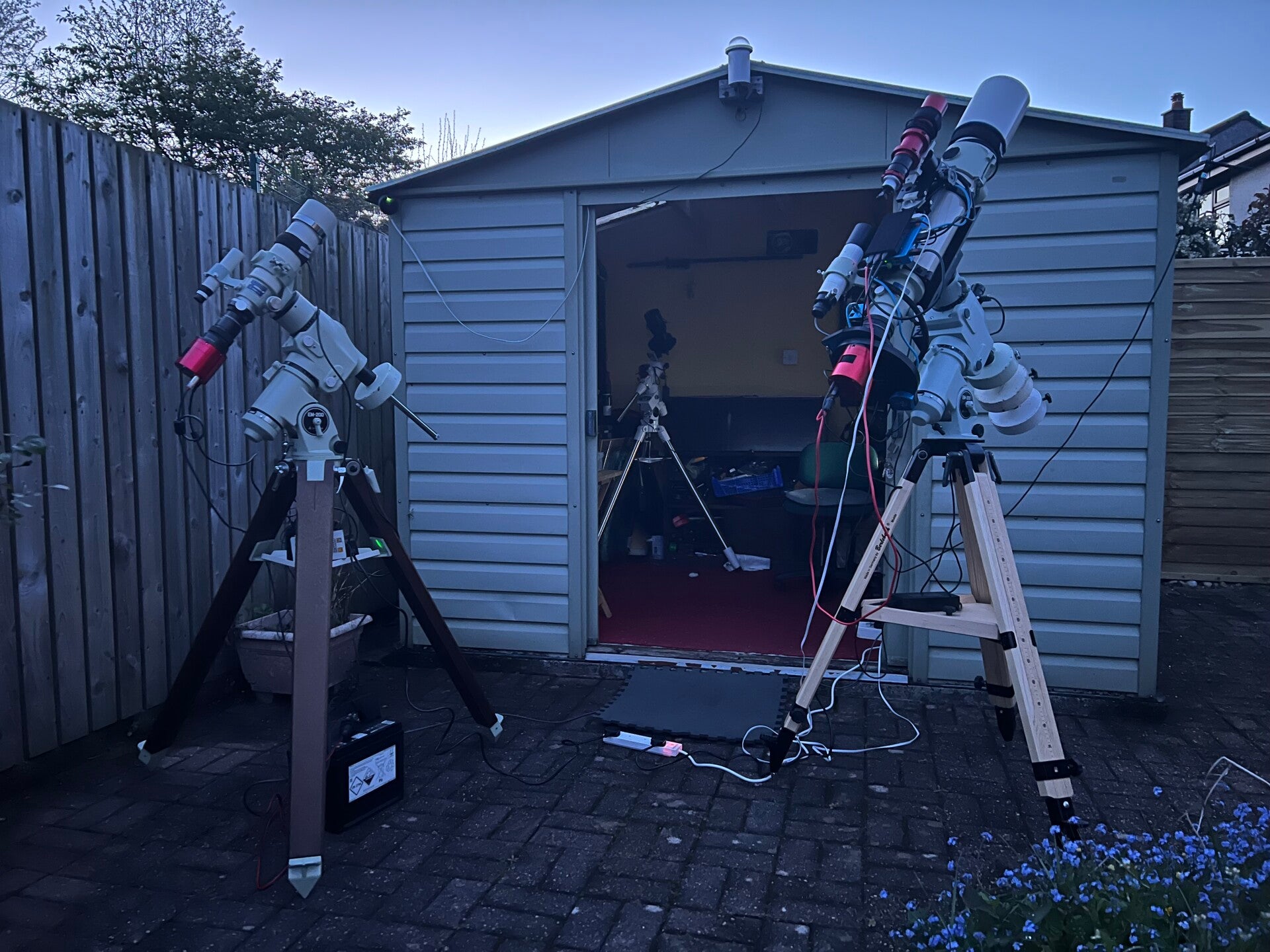
My primary imaging telescope is the reliable Takahashi FS-102 refractor, a cherished piece of equipment I've owned since 2003. This scope has been with me from the early days of film photography to the current digital era. I started experimenting with slide film and my Canon 300 SLR before switching to a Canon 10D in 2005, then an SBIG ST-8300 camera in 2010, and more recently, a ZWO ASI 2600 MM Pro. The telescope is securely mounted on an EM-200 FG Temma 2Z mount, which replaced my EM-200 USD3 mount in 2018. This combination allows for precise tracking and stunning captures. The complete rig can be lifted on and off the mount quickly allowing for quick set up times. I've tried to ensure good cable management with the Pegasus Ultimate Powerbox, MeLe mini-PC, Pegasus Focuscube 3, Falcon 2 Rotator, Indigo filterwheel with LRGBSHO filters, William Optics 50mm guidescope and QHY II guidescope
Takahashi FS-102 Configurations
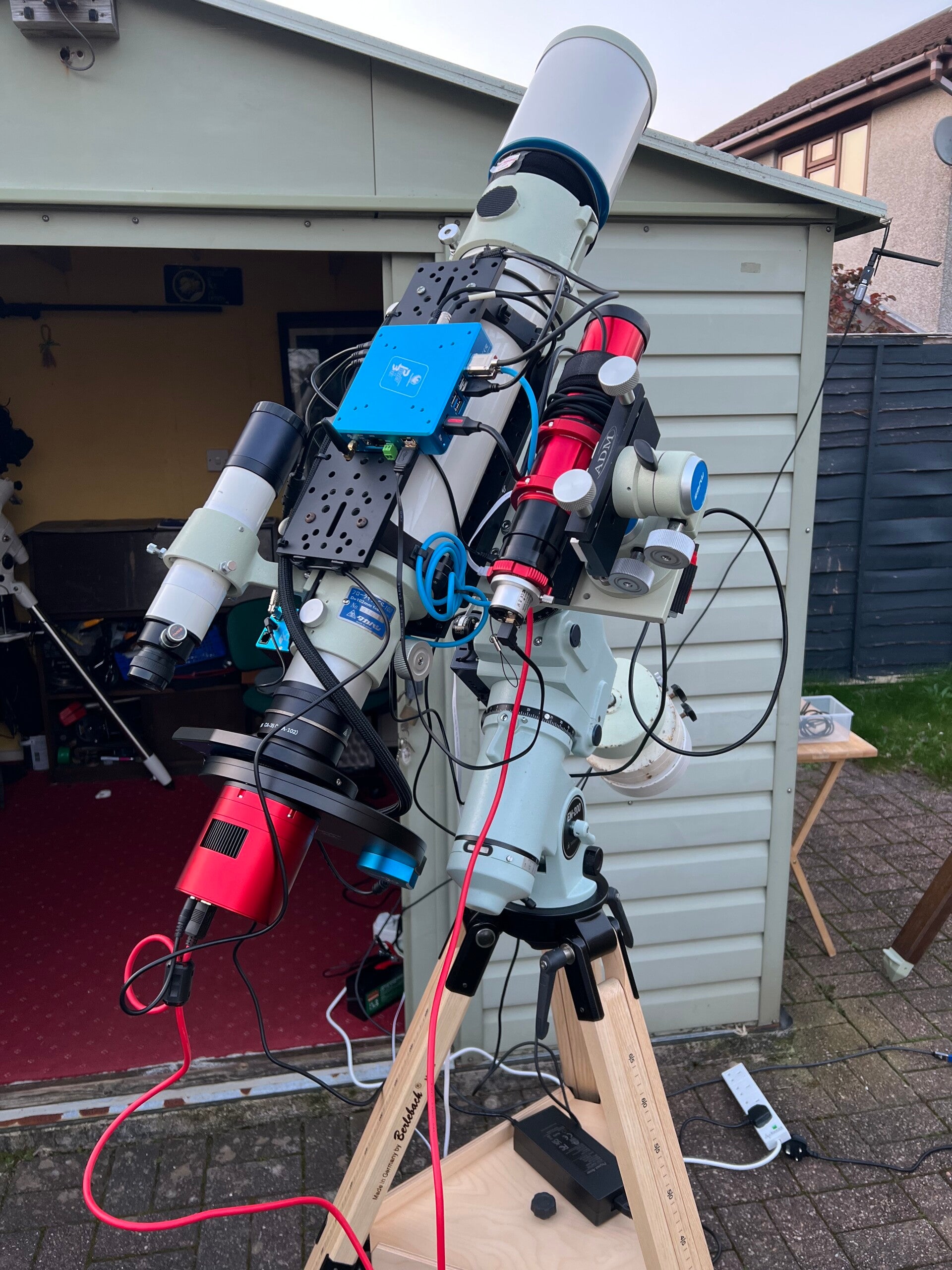
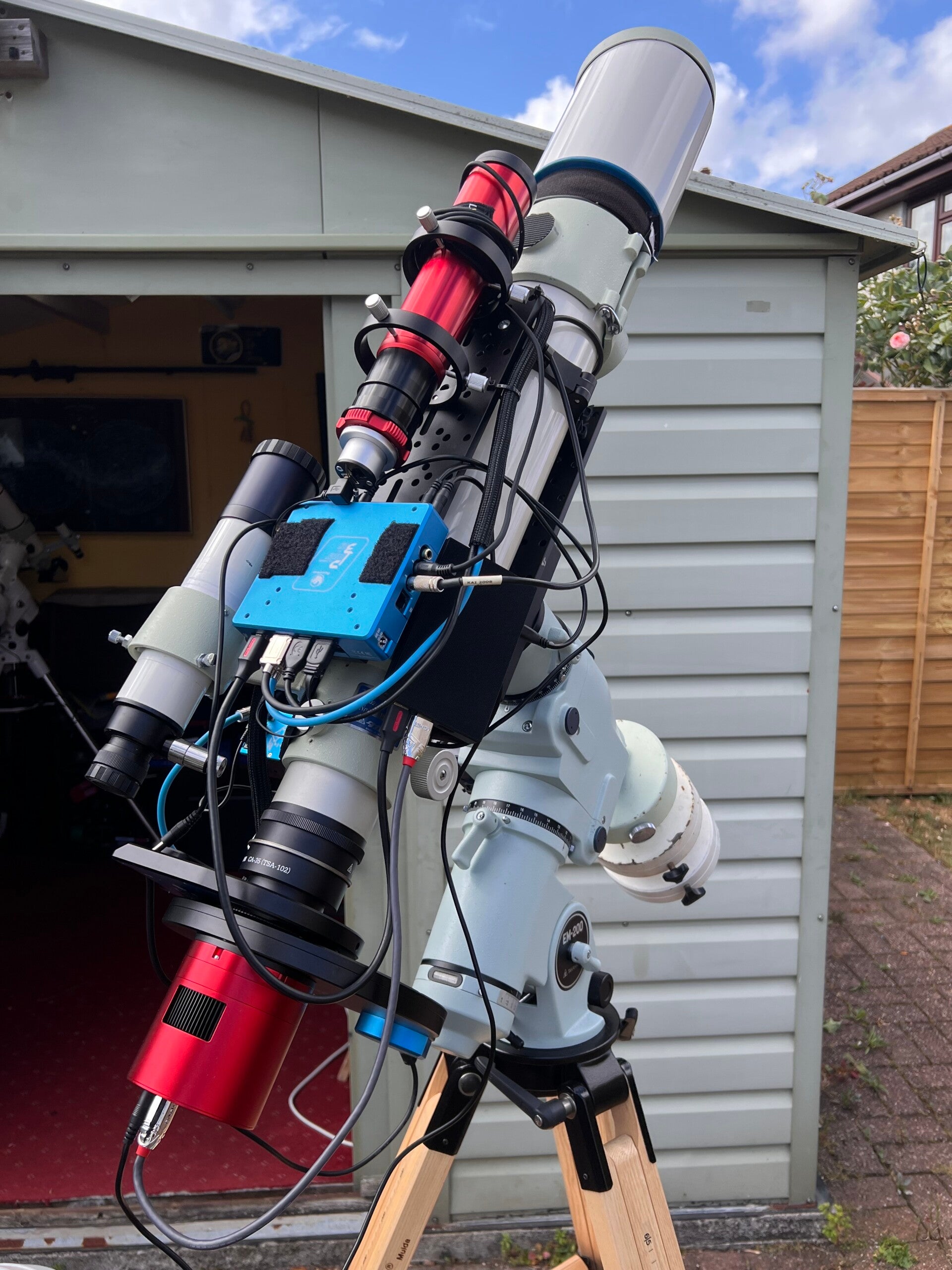
My initial astrophotography setup featured the Takahashi FS-102 main imaging tube alongside a side-by-side autoguiding scope, all mounted on a TGM-1. However, I eventually transitioned away from this configuration. The primary reasons for this change were the significant challenges posed by cable management and the difficulties encountered in balancing effectively. The image on the right shows the latest rig with better symmetrical loading and cable management
Versatile secondary equipment
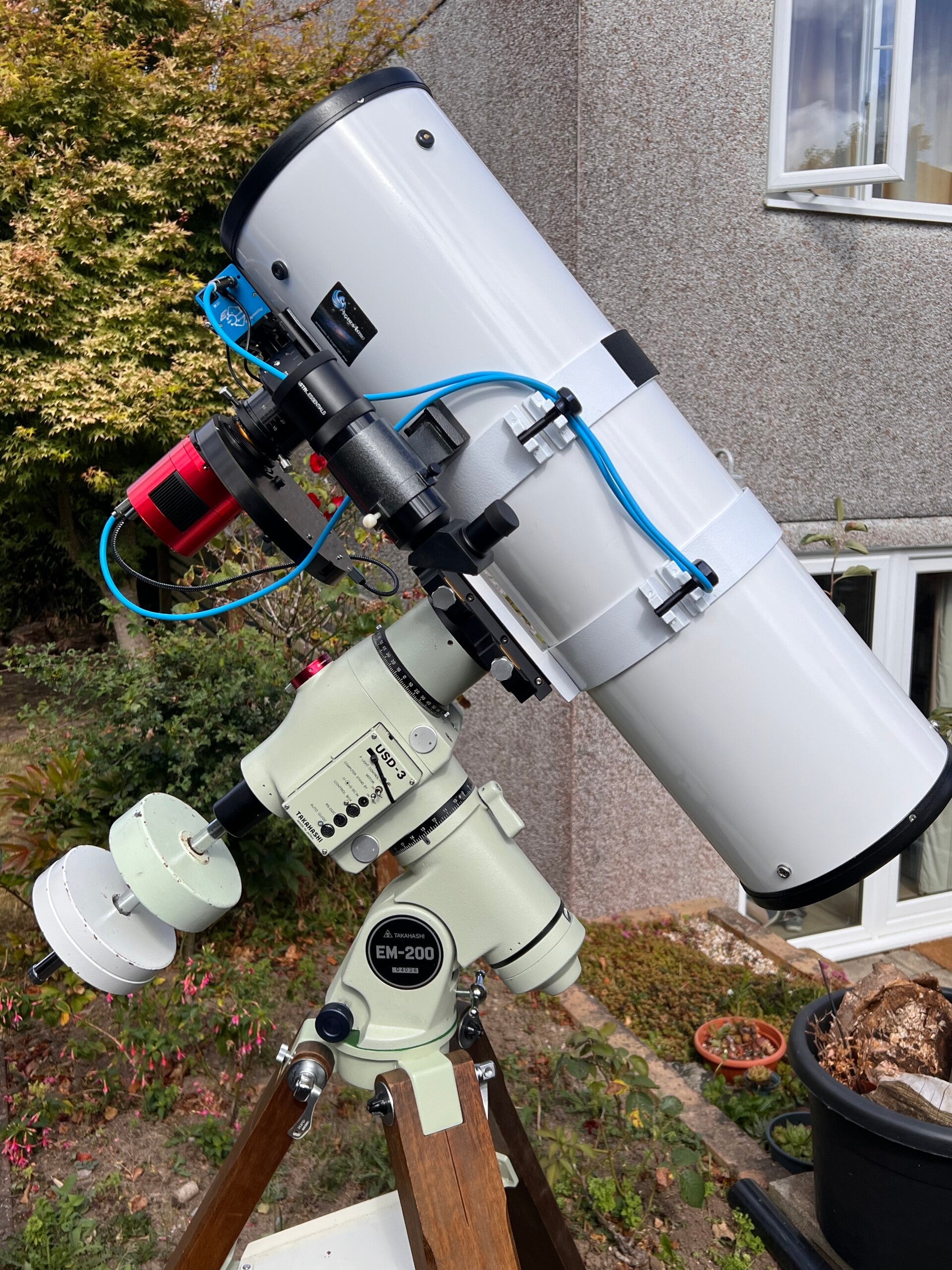
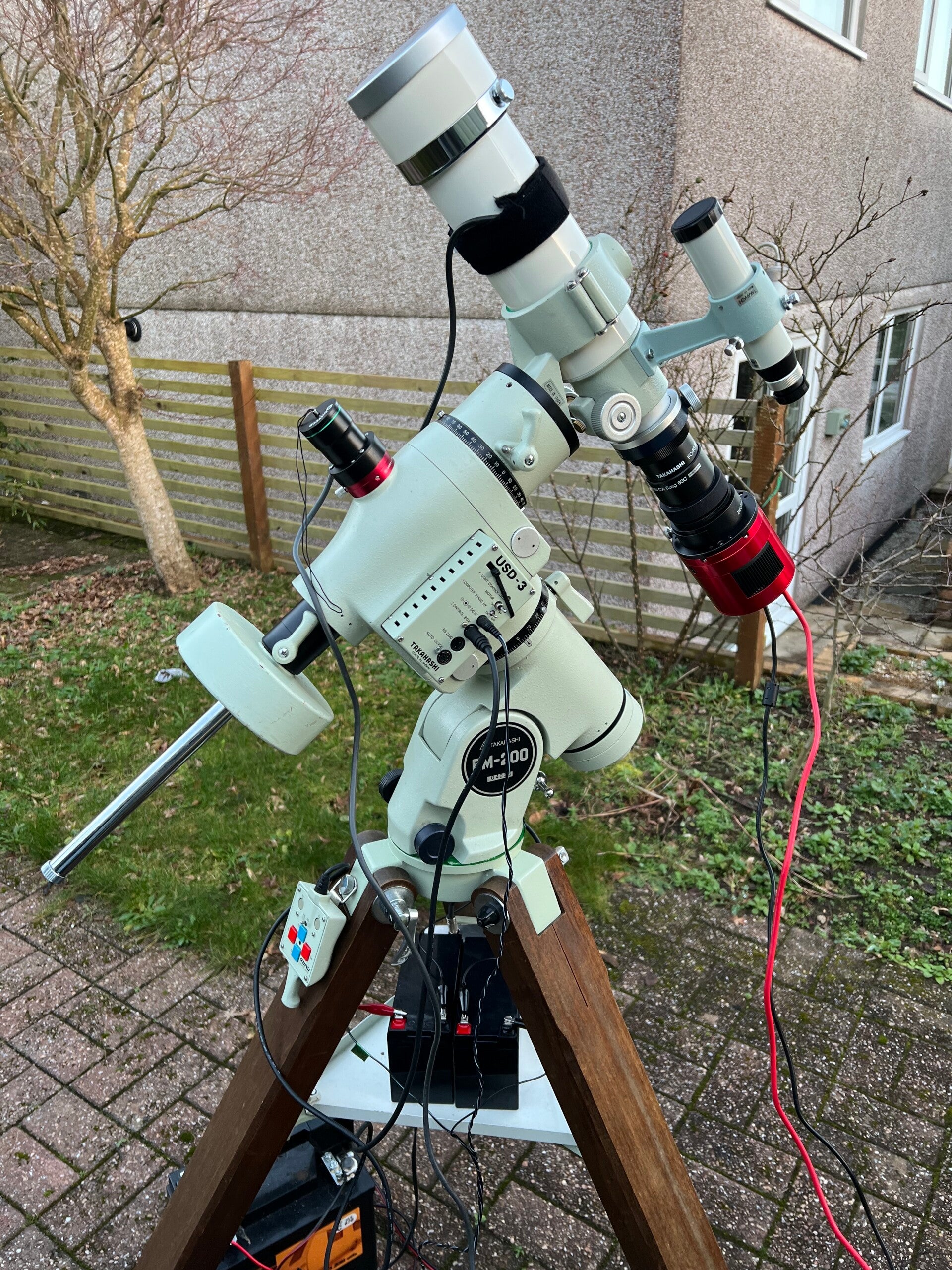
In addition to my main setup, I also utilise an FS-60 CB, paired with a ZWO ASI 071 MC Pro camera. This combination is mounted on my older EM-200 USD3, which, despite its declination drive no longer functioning, still allows me to capture impressive 2-minute unguided sub-exposures. I have also been optimising my 8-inch Orion Newtonian for imaging. This telescope, recently serviced with recoated mirrors and fitted with a Baader Diamond Steeltrack focuser and Pegasus Focuscube 3, operates at a very fast F4. It presents a challenging but rewarding experience due to its sensitivity to backspacing and tilt, but it is continuously being refined for optimal performance. This image shows the latest rig with my old Starlight Xpress filterwheel that works off the USB2 slot of the ASI camera and is controlled in NINA
Takahashi FS-60CB Setup
This setup features a Takahashi FS-60CB telescope, complemented by a multiflattener for optimal image quality and flatter field. Imaging is handled by an ASI 071 MC Pro camera. A Takahashi weighted dewshield accessory is included, which not only aids in balancing the optical tube but also enhances the telescope's aesthetic appeal. The mount used is an EM-200 USD3. Unfortunately the declination drive no longer functions and can't be replaced, however with a good polar alignment with the QHY Polemaster it can manage 2 min unguided exposures. The mount is powered by either 12V or 24V, I use the latter to speed up the RA drive when doing the polaralignment. Dew control is provided with a Kendrick Digifire 7
Why I choose Takahashi
My preference for Takahashi equipment stems from its exceptional build quality and elegant design. The reliability of these instruments is unparalleled; they simply perform flawlessly when precision and performance are most needed. This dependability allows me to focus on the art of capturing celestial objects without concerns about equipment malfunction. It’s this consistent performance and robust construction that make Takahashi a cornerstone of my astroimaging toolkit.
Computer Hardware
I have a PC running Windows 11 in my shed. I use this for NINA, Pixinsight, ASI Studio, Pegasus Unity and the Sky X. I access and control the FS-102 and ASI 2600 MM Pro set up via the MeLe mini PC via remote desktop and a network cable. To operate the SBIG camera and the Newtonian I have a second mini PC running Windows 10, again accessed via remote desktop. Unfortunately Windows decided to make all SBIG legacy drivers inoperable recently so the SBIG has to run on Windows 10. However this set up allows up to three instances of NINA operating at the same time. I use Team Viewer to access the PC indoors if needed, or monitor via my laptop, ipad or iphone.
Advice for aspiring astroimagers
For those just embarking on their astrophotography journey, my advice is to start simple. Invest in a small, high-quality refractor and a good mount. This combination provides an excellent foundation for learning the ropes and gaining experience. Focus on understanding your equipment and the sky, and enjoy the process of creating beautiful images. Solving problems as they arise is part of the learning curve, and with patience, you will build invaluable experience in this rewarding hobby.
Create Your Own Website With Webador