

NGC 281 – The Pacman Nebula
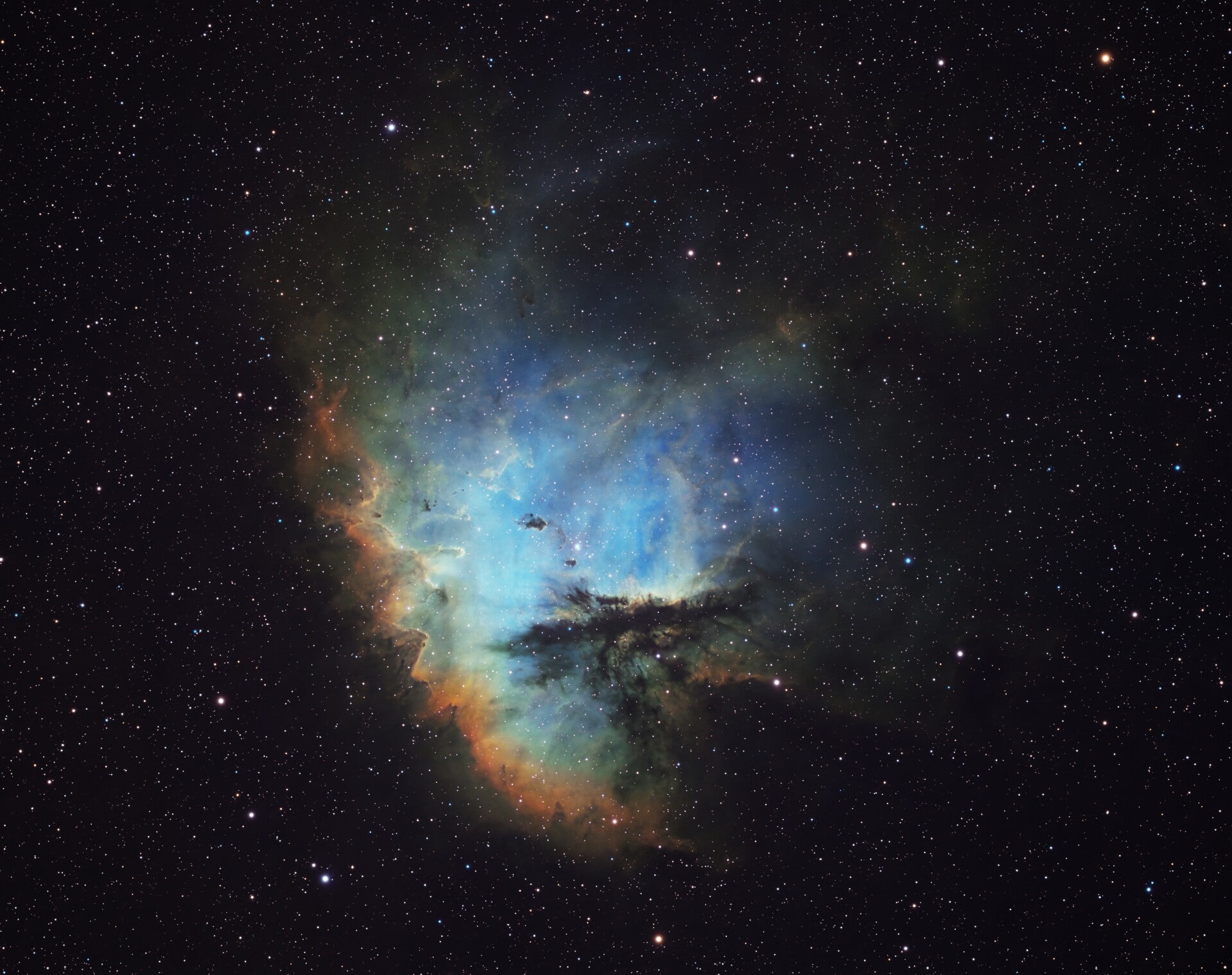
NGC 281, commonly known as the Pacman Nebula, is an emission nebula in the constellation Cassiopeia, approximately 9,200 light-years from Earth. Its distinctive shape is formed by glowing clouds of hydrogen gas, sculpted by intense radiation and stellar winds from young stars within the region. This image combines a total exposure time of 180 minutes using the Hubble Palette: hydrogen-alpha (Ha), sulphur-II (SII) and oxygen-III (OIII) filters. This narrowband approach reveals the nebula’s intricate structure and highlights the varying distribution of ionised gases across this active stellar nursery.
Heart Nebula
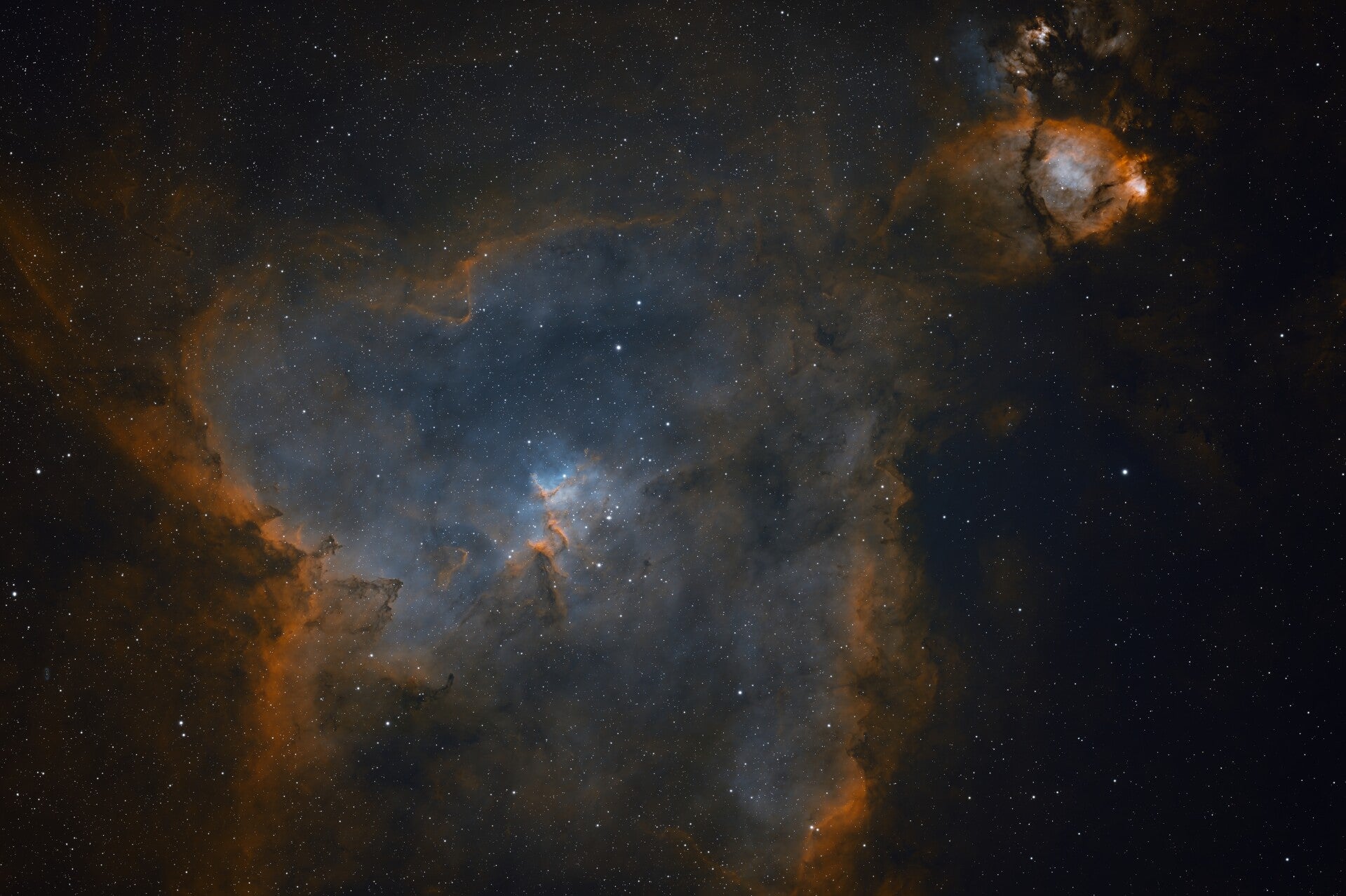
The Heart Nebula (IC 1805) is a vast emission nebula in the constellation of Cassiopeia, located roughly 7,500 light-years from Earth. Its distinctive heart-like shape is formed by glowing clouds of hydrogen gas, energised by radiation from young, hot stars within the region. This image combines a total exposure time of 120 minutes using a bi-colour HOO palette, processed from hydrogen-alpha (Hα) and oxygen III (O III) data. The Hα signal reveals the rich red hydrogen emission, while O III adds the blue-green tones that highlight the nebula’s intricate structure.
Triangulum Galaxy (M33)
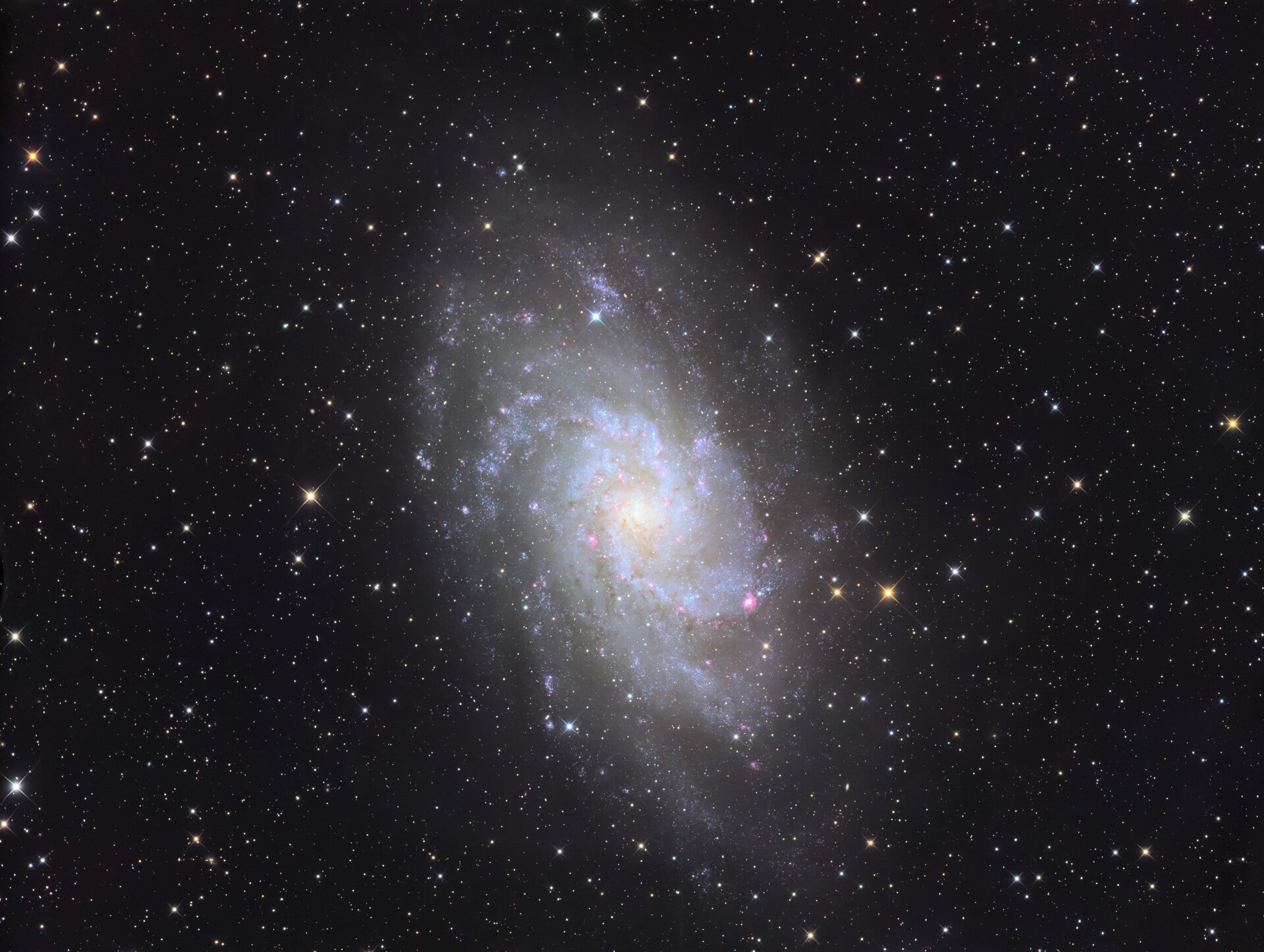
The Triangulum Galaxy, also known as Messier 33 (M33), is a beautiful spiral galaxy in the constellation Triangulum, approximately 2.7 million light-years from Earth. As a member of the Local Group, it is the third-largest galaxy in our immediate galactic neighbourhood after the Andromeda Galaxy and the Milky Way. Its broad, loosely wound spiral arms contain extensive regions of glowing hydrogen gas and active star formation, including the prominent NGC 604 nebula. This image was captured with just two hours of LRGB exposure using a super-fast f/3 Newtonian telescope, demonstrating how efficiently a fast optical system can reveal M33’s delicate structure, dust lanes and colourful star-forming regions.
Double Cluster
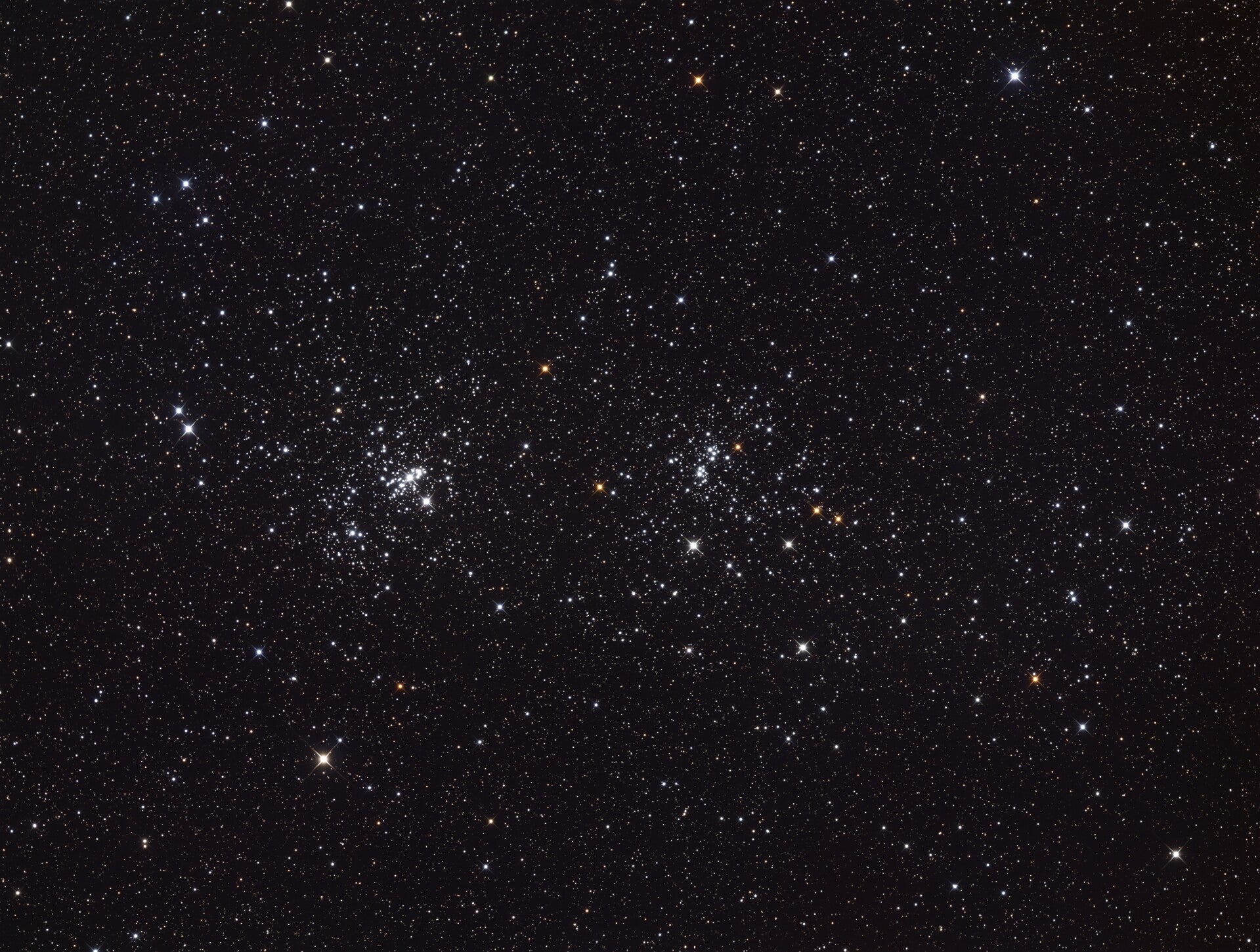
The Double Cluster, also known as NGC 869 and NGC 884, is a striking pair of open star clusters located in the constellation of Perseus. Visible as a rich concentration of stars, the pair lies around 7,500 light-years from Earth and is estimated to be approximately 13 million years old. This image was captured with a total exposure time of 60 minutes in RGB using an F/3 Newtonian telescope, revealing the clusters’ dense stellar fields and subtle colour variation among their stars.
Add comment
Comments